








Mole Removal
Content
Description
The average person has around 20 moles. They even define our uniqueness.
But when to pay attention?
Facts
- Local anesthesia
- Outpatient procedure
- Procedure takes up to 30 minutes
- Recovery in 7 - 14 days
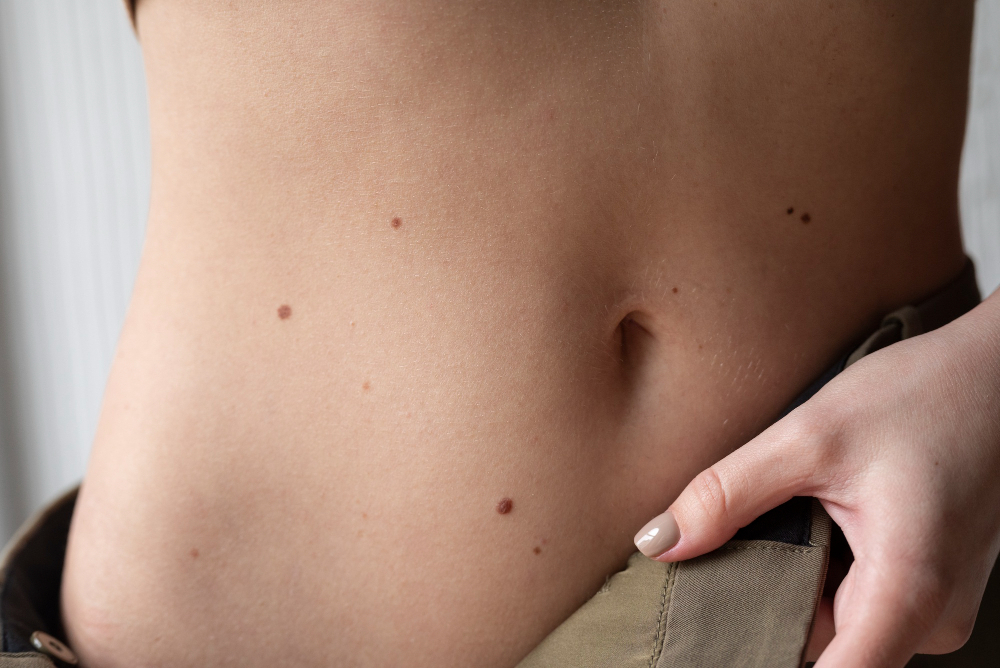
Moles (sometimes called birthmarks or nevi) refer to various skin findings that occur naturally on human skin. The average person has around 20 moles.
They define our uniqueness. If we look at them under a histologist's microscope, we would find a very diverse group of skin formations.
- The term "moles" thus includes a large number of entities. Skin moles are benign tumors that originate from various skin cells and skin adnexa (glands, hair follicles) but also from blood vessels in the subcutaneous tissue.
- The first and most important step in removing a mole is a skin examination to distinguish a mole from skin cancer.
- The shape, size, location and behavior of the mole, examination using a dermatoscope and the experience of a specialist are helpful.
- But if we want to be really sure, we have to send the mole for a histological examination.
Different types of moles allow us to use different methods in their removal.
- The classic method is to remove the birthmark by surgical excision – cutting out the birthmark and suturing the wound. A clear advantage is obtaining a mole for histology, which is especially necessary for marks with suspicious ABCDE. The disadvantage is the scar that occurs with each surgical incision.
- Cryotherapy is a treatment using low temperatures. Liquid nitrogen is used, which causes the destruction of the skin structure. Subsequently, the wound will heal.
- The laser is very effective in removing skin moles, xanthelasma (yellowish growths on the eyelashes) and hemangiomas. Pigment formations are not removed by laser. After the treatment, a scab remains, which falls off within 2 weeks.
- Smaller skin formations can be scraped off with a curette (circular blade) or removed with an electric needle (electrodesiccation).
All the above procedures take less than 30 minutes and the wounds heal within 7 days on the face and within two weeks on the body. Histological examination usually takes around 10 days.